Key Takeaways
- Clipto says media indexing can begin locally rather than requiring every file to be uploaded first.
- The product searches exact moments across video, audio, images and documents.
- Cloud, mobile, editing-suite plugins and MCP connections extend the local-first model.
- The business challenge is differentiation as Adobe, Apple and Google add similar search features.
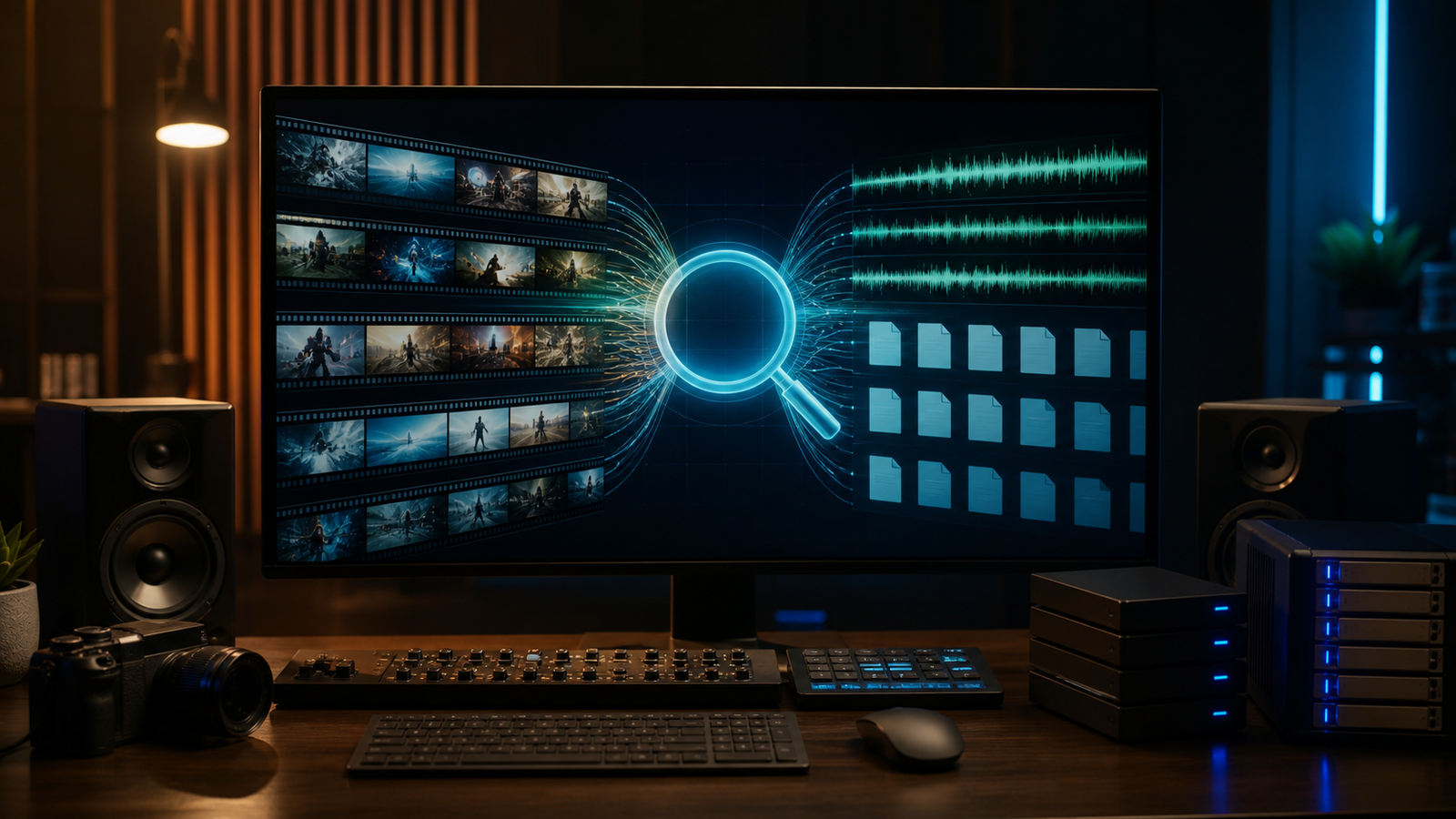
Clipto is building a local-first memory layer for videos, audio, photos, documents and bookmarks. The company has raised $15 million at a $250 million post-money valuation, according to TechCrunch, betting that people will pay for one search surface across media that already lives on their devices.
The product is easiest to understand as a retrieval layer, not another generative-video app. It does not make the footage. It tries to find the five seconds, quote or document that a creator remembers but cannot locate.
What local-first means here
Clipto’s official site says memory starts where data already lives and that videos should not have to leave the device merely to become searchable. The phrase is “local-first,” not “local-only.”
That distinction matters. The company also offers web and mobile access, cloud-powered features, editing integrations and MCP connections. Users need to check which workflow processes files locally, which sends derived data to cloud services and which synchronizes content.
A local index can improve privacy and reduce upload time for a large archive. It can also use substantial disk, CPU and GPU resources. Performance depends on the machine, codec mix and size of the media library.
The right evaluation begins with the user’s real archive, not a vendor demo folder.
Search is the product
Clipto presents several retrieval modes: find exact moments, produce summaries, locate source clips, trace research evidence and surface connections across projects.
Natural-language search is valuable when filenames and folders are poor descriptions. A documentary editor may remember “the interview where the subject pauses before discussing the bridge,” while the file is named CAMERA_B_0147.
Accuracy has several layers. The system must transcribe speech, identify shots or objects, preserve timestamps and rank the correct result. A good summary with the wrong timestamp is not a useful editing tool.
The product should therefore expose source context. Search results need a preview, timecode, file path and enough surrounding material for the editor to verify the match.
This is an official vendor demonstration of the intended workflow, not an independent retrieval benchmark.
The $250 million valuation is not the product score
TechCrunch reports a $15 million all-equity round at a $250 million post-money valuation. The company also reported strong revenue and user figures. Those numbers show investor demand and commercial traction, not search quality on a buyer’s archive.
Funding can improve model work, consumer-device performance and integrations. It can also increase expectations for growth and monetization.
Buyers should keep business evidence separate from workflow evidence. A profitable product can still fail on one codec or language. A young tool can perform well without being a safe system of record.
The durable question is whether Clipto saves more retrieval time than it adds in indexing, organization and verification.
How it compares with tools already in the stack
Major editing and media platforms are adding semantic search, transcription and asset intelligence. An editor already paying for a suite may prefer integrated search with no new database.
Clipto’s case is breadth and independence. One memory layer can connect footage, meetings, documents and bookmarks across applications. MCP can make that material available to approved AI agents.
That breadth can become a risk if permissions flatten. A creative project, private interview and client contract should not automatically share one retrieval boundary. Workspaces and connectors need explicit scope.
Our NotebookLM review makes a similar distinction: source-grounded answers are useful because the source set is visible and bounded.
A practical test with 500 files
Create a representative folder containing interviews, B-roll, mixed audio, PDFs and images. Include duplicate clips, poor audio and several languages if those exist in production.
Write ten retrieval questions before indexing. Some should target exact spoken phrases, some visual objects, some project relationships and some facts that do not exist. The last group tests whether the system admits no result instead of inventing one.
Measure indexing time, disk growth and power use. Then record top-result accuracy and the time required to verify each result.
Record false positives separately from no-result failures. The first wastes review time, while the second risks hiding useful footage; combining them into one accuracy score can conceal which workflow the product actually improves.
Repeat after renaming or moving files. A usable memory layer should explain how it handles paths, deletions and external drives without silently duplicating the archive.
Privacy needs a data-flow map
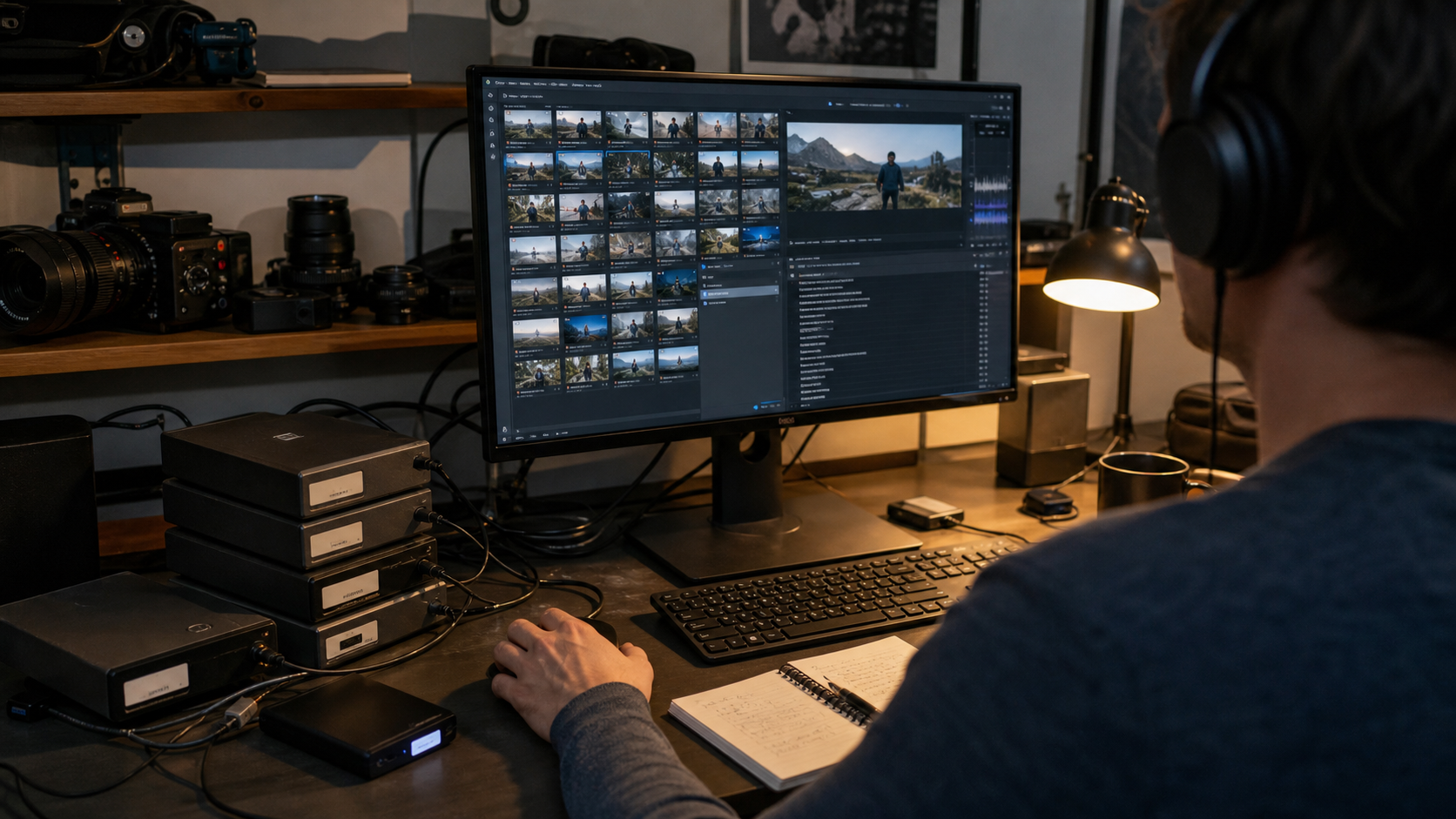
“Local-first” is an architectural promise that needs feature-level detail. Ask whether raw media, embeddings, transcripts, thumbnails, prompts and analytics leave the device for each feature.
Review retention and deletion for cloud components. Confirm whether MCP-connected agents can retrieve everything the desktop app can see. Use separate credentials and workspaces for clients.
Sensitive interviews may require consent and contractual controls beyond ordinary product settings. A local index does not change the rights attached to the footage.
Our MCP-versus-CLI evaluation explains why convenient agent access should be tested for reliability and scope rather than assumed safe because it uses a standard interface.
Where Clipto fits best
The strongest fit is a creator or team with a large, fragmented archive and recurring retrieval pain. Documentary, podcast, research and marketing teams can benefit when the same source appears across video, audio and notes.
The weaker fit is a small project already organized inside one editor with excellent search. Adding another index may create duplication rather than value.
Teams should also decide whether Clipto is a discovery layer or the authoritative catalog. If it is discovery, original files and metadata remain controlled elsewhere. If it is authoritative, backup and export become critical.
What happens next
The category will be defined by integration and trust, not only model quality. Search needs to remain fast as archives grow, survive storage changes and show evidence for every result.
Clipto has a clear thesis: personal and team media should become usable memory without requiring an upload-first workflow. The next proof is repeatable retrieval on messy libraries that creators already own.
Export is part of that proof. Before committing an archive, test whether transcripts, tags, timestamps and links can leave in a documented format. A local-first product can still create lock-in if the intelligence layer is proprietary and nonportable. Back up original media independently, then treat Clipto’s index as rebuildable until recovery and export have been demonstrated on a second machine.
Teams should also price the full workflow: subscription, indexing hardware, storage growth, verification time and connector maintenance. A fast search result is valuable only when it remains cheaper than the disorganization it replaces.
Run the same query after a software update and compare results. Search quality that drifts without a version record can disrupt a production edit just as easily as a missing file.
Quick poll
What is hardest to find in your media archive?
Clipto's value depends on returning verifiable source moments, not only fluent summaries.
FAQ
What does Clipto search? The company lists video, audio, photos, documents, meetings, voice notes and bookmarks.
Is Clipto completely offline? It is local-first, not local-only. Some web, mobile and connected features use cloud services.
How much did Clipto raise? TechCrunch reports $15 million at a $250 million post-money valuation.
Who should test it? Creators and teams with large mixed-media archives and measurable retrieval pain.